
Things to Do in Bhutan in July
July weather, activities, events & insider tips
Low Season · Budget Friendly
July Weather in Bhutan
Long-run averages for July in Paro
80°F (27°C)
High Temp
61°F (16°C)
Low Temp
6.0 inches (152 mm)
Rainfall
81%
Humidity
15
Sunny-Day UV
⚠ Monsoon landslides close mountain passes and the lateral highway between Thimphu and Bumthang for hours or overnight. This happens most where the road cuts into steep unstable hillsides east of Wangdue Phodrang. Carry water, snacks, and a charged phone on every long drive. Treat your operator's time estimates as optimistic. They are.
⚠ Leeches swarm forest trails below 3,500 m (11,500 ft) from June through September. They are harmless. They are also unsettling if you walk in unprepared. Tuck trousers into socks. Apply DEET or salt to boots and lower legs before entering forest. Check your ankles at every rest stop. The Tiger's Nest trail and forests around Bumthang see the most activity.
⚠ Flash flooding hits the Punakha and Wangdue Phodrang valleys where the Mo Chhu and Pho Chhu rivers converge. Low-lying roads become impassable for several hours after sustained heavy rain. Your operator will monitor conditions. You should too. Avoid tight connections through these valleys on days with heavy morning cloud buildup.
Is July Right for You?
Weigh the advantages and considerations before booking
Advantages
- + July is Bhutan's emptiest month. The climb to Tiger's Nest Monastery at 3,120 m (10,240 ft) feels like a private pilgrimage rather than a tourist queue, and the great dzongs of Punakha and Tashichho sit quiet enough to hear butter lamps flickering in the prayer halls. You will eat dinner in farmhouses where the cook asks about your spice tolerance because she has time to care, a courtesy that vanishes when October's festival crowds arrive.
- + The monsoon transforms Bhutan's valleys into the most intensely green landscape in the Himalayas. Rice paddies in the Punakha and Paro valleys glow with freshly transplanted shoots, temporary waterfalls cascade off granite cliffs that are bare rock in autumn, and the blue pine forests above 2,500 m (8,200 ft) drip with moss, wild orchids, and ferns that only unfurl during the wet months. The living landscape is at its most dramatic, even if the high peaks are hiding.
- + Accommodation and itinerary flexibility open up in ways that are impossible during the tshechu season rush. Boutique farmhouse stays and heritage properties that sell out months ahead in October have genuine availability, your licensed operator can adjust routes on the ground without rebooking headaches, and the pace of travel slows to something that lets Bhutan register as more than a checklist of monasteries.
- + July brings matsutake and wild mushroom season to Bhutan's highland forests. These fungi appear at Thimphu's Centenary Farmers Market and on farmhouse dinner tables, folded into bubbling ema datshi alongside the blistering green chilies or sauteed simply with Bhutan's nutty red rice. Seasonal fiddlehead ferns, wild asparagus, and monsoon greens make July's table different from any other month's.
Considerations
- − Paro records its heaviest rainfall of the year in July at 152 mm (6.0 inches), and while the rain tends toward concentrated afternoon and evening bursts rather than all-day grey, it can turn trails to mud, cancel outdoor plans for hours, and saturate everything you own. The 81% humidity means nothing dries overnight, your hiking boots from Tuesday are still damp on Thursday.
- − The Himalayan panoramas that define most Bhutan photography are hidden behind monsoon cloud cover for most of July. If clear views of Jhomolhari at 7,326 m (24,035 ft) and the eastern giants visible from high passes are the centrepiece of your trip, come in October or November. July's beauty is the valley floor, not the skyline.
- − Landslides close mountain roads without warning, along the lateral highway between Thimphu and Bumthang where the road is carved into unstable hillsides. Delays of several hours are routine, overnight closures are not unusual, and any itinerary reaching eastern Bhutan needs buffer days or a domestic flight backup.
Best Activities in July
Top things to do during your visit
July delivers Bhutan at its most intensely green and dramatically alive. The monsoon is fully underway, pushing average highs to around 27°C and lows near 16°C, with roughly 152 millimeters of rain falling across the month. That rain arrives not as an unbroken curtain but in afternoon downpours that split the day into two halves: mornings of sharp-edged mountain light, when prayer flags snap in cool breezes and the scent of pine resin lifts off warming forests, and afternoons when clouds roll through valleys like slow rivers, muffling temple bells and turning every stone path into a glossy mirror. The moisture coaxes terraced rice paddies into an electric chartreuse that looks almost artificial against the dark conifers climbing above them. Waterfalls that barely trickle in November now roar white down cliff faces, their spray carrying the mineral tang of granite. Traveling Bhutan in July means accepting the rain as the season's defining character rather than its inconvenience. Roads through the higher passes can slow to a cautious crawl when clouds descend. But the valleys themselves, Paro, Thimphu, Punakha, remain accessible and far less crowded than in the dry autumn peak. Guesthouses that fill months in advance for the October and November festival circuit have openings in July, and guides who split their attention among large groups during high season now walk trails with just a handful of travelers. The Bhutanese themselves are deep in agricultural work during July: planting rice in the lowlands, tending yak herds in the highlands, and visiting local temples to mark the turning of the season. That quotidian rhythm, the squelch of bare feet in paddy mud, the low chanting from a monastery kitchen where butter tea steams in copper pots, the thwack of an arrow hitting a distant target during weekend archery practice, is what makes a July visit feel less like tourism and more like a brief residency.

12 Days Bhutan In-depth Tour
guided_experienceThe 12 Days Bhutan In-depth Tour covers ground that most itineraries only gesture toward, moving from the western valleys of Paro and Thimphu through the subtropical lowlands of Punakha and eastward into the remote districts where the road narrows to a single lane carved into rhododendron forest. Twelve days allows the itinerary to breathe: time to sit with monks during morning prayers and hear the low, resonant drone of their chanting fill a temple's dark interior, time to hike side trails where leeches inch across wet leaves and the air smells of damp earth and wild orchids. The route traces Bhutan's cultural spine from its most well-known dzongs to villages where farmhouses still dry chillies on their rooftops in bright crimson sheets that glow against whitewashed walls.
The only way to reach the remote eastern valleys and understand Bhutan beyond its postcard icons.
Insider tip: Pack lightweight rain gaiters and tuck your trouser cuffs into your socks on forest trails in July, leeches are aggressive at lower elevations, and guides carry salt to remove them but prevention beats the cure.
This month: July's monsoon rains make the eastern road slower but also turn the Bumthang Valley's barley fields a luminous green and swell rivers to their most dramatic volume.

5-Day Private tour of Bhutan
private_tourThe 5-Day Private Tour of Bhutan distills the essential western corridor into a tight itinerary that suits travelers who cannot spare two weeks but refuse to settle for a flyby. The route links Paro, Thimphu, and Punakha, three valleys, three altitudes, three distinct temperatures you feel on your skin as the vehicle descends from the cool pine air of Dochula Pass into the warm, humid breath of the Punakha Valley, where banana plants crowd the riverbanks and the Mo Chhu river runs fast and silty. A private guide shapes each day around your pace, lingering at a dzong courtyard where pigeons coo in the rafters or pushing ahead to reach a trailhead before the afternoon clouds swallow the view.
A private, compressed route through three distinct Bhutanese valleys that rewards short schedules with outsized variety.
Insider tip: Ask your guide to schedule the Punakha Dzong visit in the early morning before monk classes begin, the courtyards are nearly empty, and the slap of wet stone under your shoes echoes off painted walls in near silence.

6 Days of Adventure with Thimphu, Punakha and Paro
otherSix Days of Adventure with Thimphu, Punakha and Paro threads together the western valleys with an emphasis on activity over passive sightseeing. Expect trail hikes where the path rises through blue pine forest, the resinous snap of crushed needles underfoot mixing with the distant crack of thunder over the next ridge. Punakha's warmer elevation means the river is high enough in July for white-water sections that send cold spray across your face and arms, and the surrounding rice paddies are ankle-deep in water, reflecting clouds in their glassy surfaces. The itinerary balances physical days with cultural stops, the massive Punakha Dzong sitting at the confluence of two rivers, its interior dim and incense-heavy, its courtyard stones worn smooth by centuries of monastic feet.
Pairs physical adventure with cultural depth across three valleys at a pace that keeps the body moving and the mind engaged.
Insider tip: Bring a dry bag for your camera and phone during any river activity in July, even on overcast mornings, the spray is constant, and the humidity alone can fog an unprotected lens.
This month: July's high water levels in the Mo Chhu and Pho Chhu rivers make Punakha's rafting sections more dynamic than in drier months.

Private Multi-Day Bhutan Tour: Paro, Taktsang Monastery, Thimphu
day_tripThe Private Multi-Day Bhutan Tour covering Paro, Taktsang Monastery, and Thimphu centers its emotional weight on the climb to Tiger's Nest, Taktsang, clinging to a sheer cliff face at over 3,000 meters, its white and gold walls appearing to levitate above the forest canopy. The ascent in July is a sensory gauntlet: the trail weaves through dripping prayer-flag corridors where mist moves through the trees like a living thing, the ground is slick with rain and pine mulch, and the smell of wet juniper is so thick you taste it at the back of your throat. When the monastery finally materializes through a gap in the cloud, the waterfall beside it thunders with monsoon force, its roar drowning out everything but your own breathing. Thimphu rounds out the itinerary with the weekend market, Tashichho Dzong, and the chance to watch traditional paper-making by hand.
The Tiger's Nest climb in monsoon conditions strips away the postcard cliché and replaces it with a raw, fog-wrapped pilgrimage that earns every step.
Insider tip: Start the Taktsang hike at first light, ideally before six, July clouds typically close in by midmorning, and the monastery is most visible in that early window when mist still clings to the valley floor below you rather than the cliff above.
This month: July's monsoon magnifies the waterfall beside Taktsang to its fullest volume, a sight and sound absent during the dry autumn months.

Bhutan Highlights Tour - 7 Nights 8 Days of Culture & Adventure
guided_experienceThe Bhutan Highlights Tour spanning seven nights and eight days of culture and adventure builds a deliberate arc from the kinetic energy of Thimphu, where monks in maroon robes navigate traffic circles and the clatter of construction mixes with temple horns, through the quiet intensity of Punakha's river valley and into Paro's final climb to Taktsang. Eight days is long enough to escape the checklist mentality: there is time to sit in a farmhouse kitchen and watch a family press fresh cheese, the warm curd squeaking against the cloth, or to walk a valley trail where the only sound is rain tapping broad-leafed plants and a distant cowbell. The guided structure means logistics vanish, freeing attention for the details that make Bhutan feel unlike anywhere else, the hand-painted phalluses on house walls warding off evil spirits, the creak of a prayer wheel spun by water, the sudden sweetness of wild strawberries found on a hillside.
Eight days across the core western circuit at a pace that turns sightseeing into genuine immersion.
Insider tip: On the drive between Thimphu and Punakha, ask your guide to stop at Chimi Lhakhang and walk the paddy-field path to the temple rather than driving to the closer drop-off, the twenty-minute walk through working fields with farmers knee-deep in water is the single best window into rural Bhutanese life.

Bhutan Tour Package
guided_experienceThe Bhutan Tour Package delivers a structured, guide-led sweep through the country's western heartland. What distinguishes it from a bare itinerary is the caliber of local guides who narrate not just the history of each dzong but the living culture around it, explaining why a farmer ties a white scarf to a newly planted field, why the smell of burning juniper drifts from every household at dawn, and how the crunch of dried red chillies under a wooden mallet is the ambient sound of Bhutanese autumn preparation even in July's green peak. The package handles the government-mandated daily sustainable development fee, permits, and internal transport, turning what can be a logistically opaque country into a straightforward experience. Evenings often end in guesthouses where the wood-paneled dining room smells of butter tea and buckwheat pancakes sizzling on a cast-iron griddle.
A logistics-free entry point into Bhutan that handles permits, fees, and transport so you arrive at each temple and trail with nothing to manage but your own attention.
Insider tip: Confirm with your operator that the package includes a stop at Punakha Dzong during the return leg, some compressed versions skip it, and it is the single most architecturally impressive structure in western Bhutan.
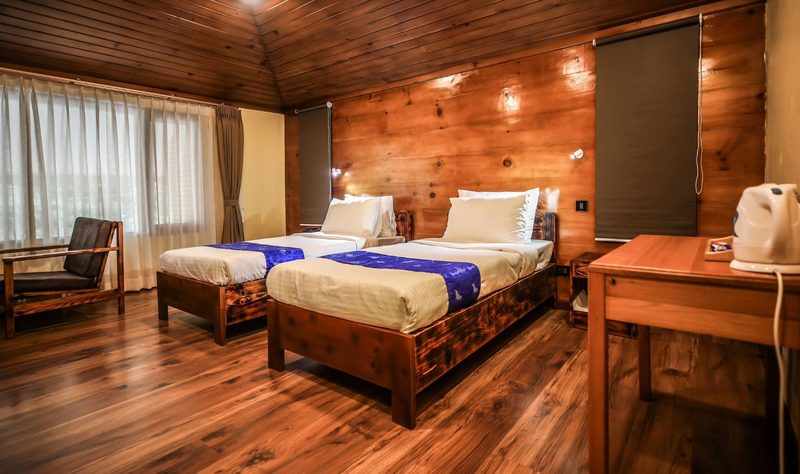
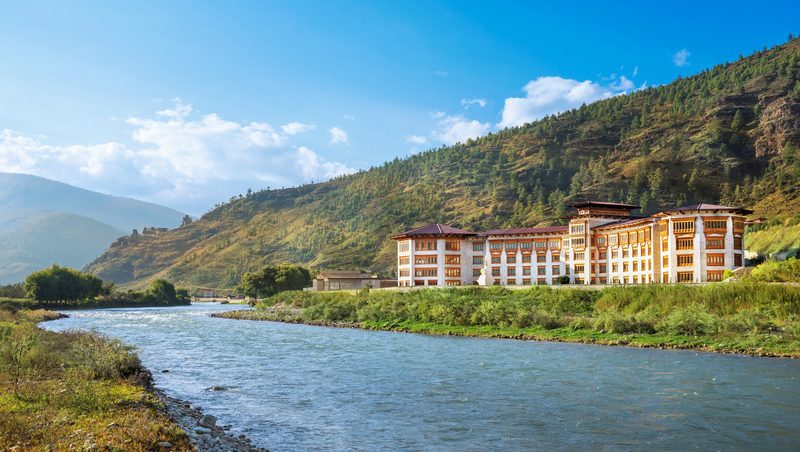
Where to Stay in Bhutan in July
Hand-picked hotels across price tiers for July travellers.
Public Holidays in July
Dates that affect opening hours, transport and crowds
Birth Anniversary of Guru Rinpoche
Observed nationwide as a public holiday. Date calculated from the national holiday calendar.
First Sermon of Lord Buddha
Observed nationwide as a public holiday. Date calculated from the national holiday calendar.
Packing Checklist
Bookmark this page — your progress is saved between visits
Need the full list with shopping links?
Climate-specific gear, brand recommendations, and what to leave at home.
View Bhutan Packing List →Essential Tips
Insider knowledge and common pitfalls to avoid
Insider Knowledge
Ask your guide about the northern forest approach to Tiger's Nest. Skip the main trail. This route adds roughly an hour of walking. You approach the monastery from above with the full cliff-face view. The standard path hides this until the final 200 m (650 ft). In July, the monsoon forest along this route becomes the experience itself. Wild orchids cling to branches. Curtains of moss hang everywhere. The smell of wet pine grows so thick you can taste it. This is not scenery you walk past.
Bhutanese food is built on whole chilies, not spice blends. Ema datshi means blistered green chilies cooked in cheese. It is not a mild curry with heat on the side. Learn the Dzongkha phrase 'ma tshapo' before your first meal. Cooks will prepare milder versions without making you feel difficult. In July, fresh seasonal chilies hit their sharpest. Locals treat this as a point of pride.
Power outages during monsoon storms are routine even in Paro and Thimphu. Pack a headlamp. Your phone flashlight will not suffice. Confirm whether your accommodation has a backup generator before check-in. Most heritage hotels do. Some farmhouse stays do not. A power cut at altitude after dark during a downpour is simply dark and cold. It is not charming.
If your itinerary reaches east to Bumthang, build in at least two buffer days beyond what your operator initially suggests. The 260 km (160 mile) lateral road crosses three passes above 3,000 m (9,800 ft). In July, landslide clearance crews work constantly. They cannot guarantee same-day reopening. The domestic flight between Paro and Bumthang, when schedules allow, eliminates road risk entirely. It saves a gruelling ten-hour drive. Request it when planning.
Avoid These Mistakes
Avoid packing for warm weather just because the average high reaches 27°C (80°F). At Paro's 2,300 m (7,500 ft) elevation with 81% humidity, that number misleads. Damp heat clings during daylight. Evenings at 16°C (61°F) feel sharply cold when everything you own is wet. Travelers who bring only shorts and light shirts tend to spend their first evening in Thimphu buying a fleece they should have packed.
Do not plan a rigid day-by-day itinerary without buffer time. July roads in Bhutan are unpredictable. An operator who promises a locked schedule through eastern Bhutan during monsoon is being optimistic at best. The travelers who enjoy this month treat landslide delays as openings. An extra farmhouse meal. A traditional hot stone bath. These are opportunities, not disasters.
Never skip complete travel insurance. Do not buy a policy that excludes weather-related disruptions. Bhutan's medical facilities are basic even in Thimphu. The standard protocol for serious injuries is evacuation to Bangkok or Delhi by air. Monsoon road closures can force itinerary changes that carry real cost. Your licensed operator handles logistics. Insurance handles the financial exposure that monsoon travel quietly creates.
Ready to plan your trip to Bhutan?
Now that you've got the research covered, here's where to go next.
Explore More Activities in Bhutan
Didn't see anything interesting yet?
Browse Viator's full catalog of tours, day trips, food experiences, and private guides in Bhutan.
See All Bhutan Tours on Viator