
Things to Do in Bhutan in June
June weather, activities, events & insider tips
Low Season · Budget Friendly
June Weather in Bhutan
Long-run averages for June in Paro
80°F (26°C)
High Temp
59°F (15°C)
Low Temp
3.8 inches (97 mm)
Rainfall
79%
Humidity
14
Sunny-Day UV
⚠ Monsoon-season landslides can close Bhutan's mountain roads, the Lateral Road east of Wangdue Phodrang. Travel east of Punakha in June requires itinerary flexibility and a willingness to wait out closures. Your operator should have contingency plans. But ask explicitly before booking.
⚠ Leeches are pervasive on forested trails below 3,000 m (9,800 ft) from June through September. They are not dangerous but are psychologically distressing for unprepared travelers. Leech socks, gaiters, and DEET-based repellent on footwear are effective countermeasures. Your guide will carry salt as a removal tool.
⚠ Altitude compounds monsoon weather risks. Paro sits at 2,200 m (7,200 ft) and key passes exceed 3,000 m (9,800 ft), where reduced oxygen, cold rain, and sudden fog can escalate a manageable afternoon shower into a hypothermia risk for underdressed hikers. Carry warm layers and rain protection on every outing regardless of the morning forecast.
Is June Right for You?
Weigh the advantages and considerations before booking
Advantages
- + June's early monsoon turns Bhutan's valleys into the most intensely green landscape in the Himalayas. Rice paddies flood across the Punakha and Paro valleys. Waterfalls that barely trickle in autumn become roaring white curtains along the Lateral Road. The blue pine forests between Thimphu and Dochula Pass deepen to an almost unreal emerald. If landscape photography is your thing, this is the month the valleys earn their postcard.
- + Visitor numbers drop sharply once monsoon arrives. In a country that already controls access through its daily fee structure, June means having dzongs, monastery courtyards, and even the Tiger's Nest trail to yourself in a way that October visitors simply cannot. Standing alone inside the main courtyard of Punakha Dzong while rain drums on the wooden balconies overhead is a different experience from shuffling through it shoulder-to-shoulder.
- + Paro's average high of 26°C (80°F) and low of 15°C (59°F) make June one of the most comfortable months for trekking and sightseeing. While the rest of South Asia bakes under pre-monsoon heat or drowns in full monsoon, Bhutan's altitude keeps temperatures moderate enough for long hikes without heat exhaustion. Nights stay cool enough for deep sleep under a blanket.
- + Summer tshechus in Bumthang, the religious dance festivals that are the heartbeat of Bhutanese cultural life, tend to fall around June. Catching one without peak-season crowds means you can stand close enough to hear the silk costumes whisper as the masked dancers spin. You will smell the juniper smoke from the incense burners. You will feel the low vibration of the dungchen horns in your ribcage rather than watching it all from behind a wall of selfie sticks.
Considerations
- − The monsoon is arriving. While June's 97 mm (3.8 inches) of rainfall in Paro is moderate compared to July's 152 mm (6.0 inches), afternoon showers are frequent enough to cut outdoor days short. Cloud cover rolls in by midday more often than not, regularly blotting out the Himalayan panorama from Dochula Pass and turning distant peak views into a grey wall. You will need to plan mornings aggressively. Some views simply will not cooperate.
- − Hiking trails, including the stone-and-earth approach to Tiger's Nest, turn slick and muddy. Leeches become a genuine problem on forested paths below 3,000 m (9,800 ft). The Druk Path Trek between Paro and Thimphu is substantially harder when wet, with boggy alpine meadows and reduced visibility on the high passes. If you came for above-treeline trekking, June will test your patience and your gear.
- − Mountain roads deteriorate as monsoon rain saturates Bhutan's narrow, cliffside highways. Landslides can close sections of the east-west Lateral Road for hours or occasionally a full day. Any itinerary that pushes east toward Bumthang or Trashigang needs genuine flexibility built in. Rigid four- or five-day tours that cannot absorb a road closure will leave you sitting in a guesthouse common room watching rain streak down the windows.
Best Activities in June
Top things to do during your visit
Bhutan in June brings the first full breath of the monsoon, and with it a transformation that few visitors expect. The valleys around Thimphu and Punakha turn an almost violent shade of green as rice paddies flood and terraced hillsides soak up afternoon showers. Daytime temperatures reach around 80°F, warm enough that the stone-and-timber dzongs radiate heat through their whitewashed walls, while evenings cool to a gentle 59°F that makes sleeping under heavy blankets a comfort rather than a chore. The air smells of wet pine and damp earth, and waterfalls that trickle politely through the dry months now crash down granite faces with enough force to send mist across entire hiking trails. Rainfall averages just under four inches for the month, lighter than the soaking July and August that follow, which makes June a window where the landscape is lush but not yet waterlogged. This is the season when Bhutanese farmers are busiest, ankle-deep in flooded paddies, transplanting rice seedlings by hand in long communal lines. Travelers who time their visit to June will see working agriculture up close in a way that the peak autumn trekking season never reveals. The clouds that gather each afternoon tend to burn off by morning, offering clear views of Himalayan peaks before noon and dramatic, roiling skies by late afternoon. Bhutan feels quieter now than in the popular March-to-May window or the festival-heavy autumn months, and that solitude carries real advantages: shorter waits at Tiger's Nest, emptier courtyards in the dzongs, and guides who have time to linger rather than hustle groups through on a tight schedule. For anyone willing to carry a rain jacket and embrace the occasional downpour, Bhutan in its monsoon onset is a rewarding place to travel.

12 Days Bhutan In-depth Tour
guided_experienceTwelve days in Bhutan is long enough to move beyond the well-trodden Paro-Thimphu-Punakha corridor and into the country's wilder eastern reaches, where the forest canopy closes overhead and the sound of rushing rivers replaces traffic. This in-depth guided tour covers the full breadth of the kingdom, from the prayer-flag-draped passes of the west to the bamboo groves and weaving villages of the east, where women work backstrap looms on their porches and the clack of wooden shuttles carries across quiet valleys. In June, the route's higher passes may be wrapped in cloud by midday. But the valleys below stay warm and fragrant with wild cannabis and blooming rhododendron remnants.
The only way to see Bhutan's remote eastern districts without the logistical headaches of self-arranging permits, drivers, and lodging across a country with almost no public transport infrastructure.
Insider tip: Request that your guide schedule the drive over Thrumshingla Pass for early morning, before clouds settle in, so you catch the panoramic views of the Black Mountains while the light is still golden and the valleys below are free of haze.
This month: June rainfall has begun but remains well below July and August levels, so eastern roads are generally passable though occasionally muddy on unpaved stretches.

5-Day Private tour of Bhutan
private_tourFive days distills Bhutan's western highlights into a focused circuit that wastes no time on filler. This private tour moves through Paro's broad valley, where the iron-chain bridge sways underfoot and the Paro Chu river runs grey-green with snowmelt, then climbs to Thimphu for a capital that feels more like a mountain town, its weekend market fragrant with incense sticks and blocks of fermented cheese. The pace is brisk but not rushed, with a private vehicle and guide who can adjust the itinerary when a monastery courtyard is empty or a rice-planting ceremony is happening in a nearby village. The scent of juniper smoke from household offerings drifts through every town you pass.
A tightly edited introduction to Bhutan that covers the essential landmarks with the flexibility of a private vehicle and guide, good for travelers with limited leave.
Insider tip: Ask your guide to stop at the National Textile Museum in Thimphu on a weekday morning when the weaving demonstration room is uncrowded, and you can hear the artisan explain each pattern's regional origin without competing with tour groups.

6 Days of Adventure with Thimphu, Punakha and Paro
otherSix days split across Thimphu, Punakha, and Paro gives this tour a satisfying geographic arc, moving from the administrative capital down through the subtropical Punakha Valley and back up to the mountain air of Paro. Punakha in June is the warmest stop on the route, where the Mo Chhu and Pho Chhu rivers converge beneath the massive Punakha Dzong, its walls rising from the riverbank like a landlocked fortress, the wet wood and old stone exhaling a cool mineral scent even on the warmest afternoons. The adventure angle means white-water rafting on the Mo Chhu and day hikes through forests where langur monkeys crash through the canopy overhead, their calls echoing off the valley walls.
Punakha's warm, low-altitude valley offers Bhutan's most dramatic river scenery and the chance to raft alongside the country's most imposing dzong.
Insider tip: On the Punakha suspension bridge crossing, go in the late afternoon when the prayer flags catch sideways light and the bridge empties out, giving you an unobstructed view downriver toward the dzong's white-and-red facade.
This month: The Mo Chhu river runs higher in June as monsoon rains begin, which makes rafting more exciting but requires a reputable operator with experienced guides for the increased current.

Private Multi-Day Bhutan Tour: Paro, Taktsang Monastery, Thimphu
day_tripThis private multi-day tour zeroes in on the two experiences most travelers come to Bhutan for: Taktsang Monastery, known as Tiger's Nest, clinging to a sheer cliff face nine hundred meters above the Paro Valley floor, and the cultural density of Thimphu, where monasteries and government buildings share streets with artisan workshops. The hike to Tiger's Nest takes most of a day, climbing through blue pine forest where the air thins and smells of resin and damp moss, the monastery appearing and disappearing through gaps in the canopy until you round a final bend and see it in full, impossibly attached to bare rock. In June, the trail can be slick with rain, and the mist that curls around the cliff gives the monastery an otherworldly quality that dry-season photos never capture.
Tiger's Nest is Bhutan's single most well-known sight, and reaching it on foot through cloud forest in the monsoon onset is a different experience from the clear-sky autumn climb.
Insider tip: Start the Tiger's Nest hike no later than seven in the morning to reach the monastery before clouds obscure the valley views, and wear proper hiking boots with ankle support since the stone steps near the top grow slippery when wet.
This month: The Tiger's Nest trail is wetter in June than in peak season, making the stone staircase sections near the monastery slippery. Trekking poles and waterproof layers are essential.

Bhutan Highlights Tour - 7 Nights 8 Days of Culture & Adventure
guided_experienceEight days and seven nights is the sweet spot for a Bhutan itinerary that balances cultural immersion with enough breathing room to absorb what you are seeing. This guided experience threads through the country's major valleys, pausing long enough in each to visit a dzong in the morning light, eat a slow lunch of red rice and ema datshi while rain drums on a tin roof, and hike a trail in the afternoon as the clouds lift. The tour's cultural emphasis means time with monks during prayer sessions, where the low drone of chanting and the sharp crack of hand drums reverberate through incense-thickened air, and visits to farmhouses where ara, the local grain spirit, is poured warm from a kettle.
The eight-day format allows the cultural depth that shorter tours sacrifice, including monastery stays, farmhouse meals, and enough time in each valley to see it in shifting weather and light.
Insider tip: Bring a headlamp for any monastery visit that includes a prayer hall tour, as many interiors are lit only by butter lamps whose flickering glow makes it difficult to see the detail in centuries-old wall paintings without your own light source.

Bhutan Tour Package
guided_experienceThis tour package covers Bhutan's essential western circuit with a structure that works for travelers who want the major landmarks without the complexity of a longer itinerary. The route hits Paro, Thimphu, and the high-altitude passes between them, where prayer flags by the thousands snap in winds that carry the cold bite of glacial air even in June. Thimphu's weekend market is a sensory education on its own: slabs of dried yak meat stacked alongside rounds of datshi cheese, piles of dried red chilies whose capsaicin sharpness hits your nose before you get within arm's reach, and bolts of hand-woven fabric in geometric patterns that each signify a specific region. The guided structure means permits, vehicles, and accommodation are handled, leaving you free to focus on the country itself rather than the logistics of navigating a place with few road signs and no ride-hailing apps.
A well-priced entry point into Bhutan that covers the western essentials with enough structure to eliminate the logistical friction that the country's tourism model can create for independent travelers.
Insider tip: If your itinerary includes a free afternoon in Thimphu, walk uphill to the Buddha Dordenma statue at sunset, when the gilded bronze catches the last warm light of the day and the entire Thimphu valley spreads out below in deepening shadow, almost always free of other visitors at that hour.
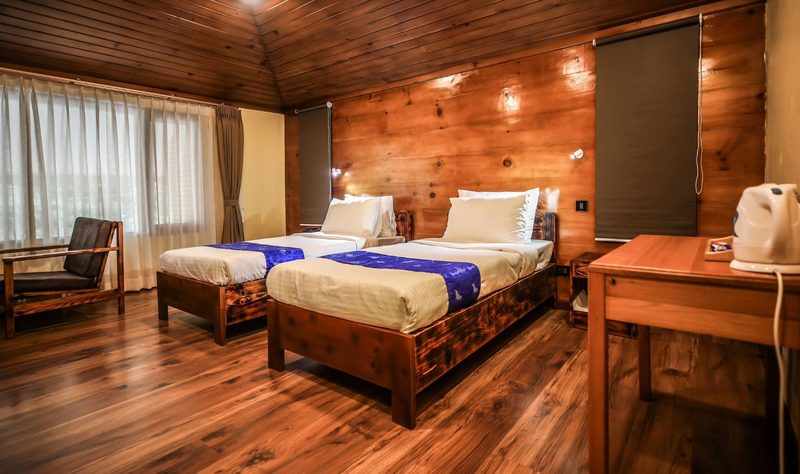
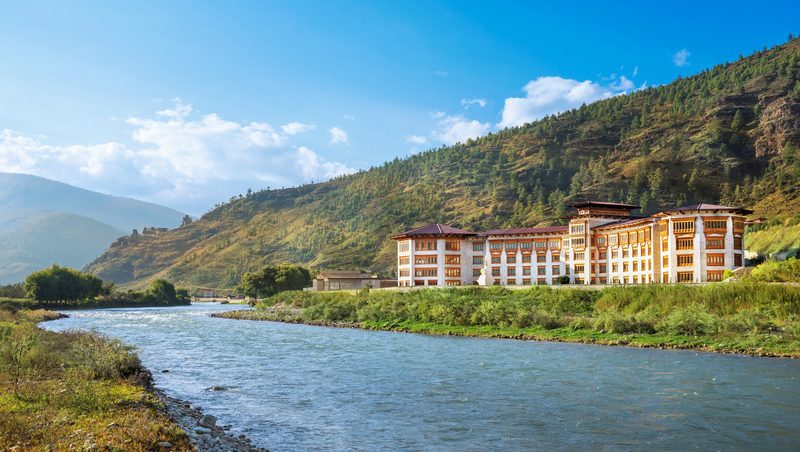
Where to Stay in Bhutan in June
Hand-picked hotels across price tiers for June travellers.
Public Holidays in June
Dates that affect opening hours, transport and crowds
Birth Anniversary of Guru Rinpoche
Observed nationwide as a public holiday. Date calculated from the national holiday calendar.
Lord Buddha's Parinirvana
Observed nationwide as a public holiday. Date calculated from the national holiday calendar.
Packing Checklist
Bookmark this page — your progress is saved between visits
Need the full list with shopping links?
Climate-specific gear, brand recommendations, and what to leave at home.
View Bhutan Packing List →Essential Tips
Insider knowledge and common pitfalls to avoid
Insider Knowledge
Spend your first full day in Paro before attempting serious hiking or driving to higher elevations. Paro sits at 2,200 m (7,200 ft), high enough to trigger mild altitude symptoms in lowland arrivals. Headache. Shortness of breath. Poor sleep. Jumping straight to Dochula Pass at 3,100 m (10,170 ft) or a Druk Path campsite at 3,800 m (12,470 ft) on day one guarantees misery. Walk the Paro town valley. Visit Rinpung Dzong slowly. Drink water constantly. Let your body adjust. Your guide knows this. They may not insist unless you ask.
Bhutanese food ranks among Asia's spiciest. This is not marketing. Ema datshi uses whole green chilies as the primary ingredient, not seasoning. The heat accumulates across a meal. Ask for milder versions on your first night if you have never eaten Bhutanese food. Build up over the week. The red rice accompanying every meal has a nutty, slightly chewy texture unlike rice elsewhere. It buffers heat. Suja, the salted butter tea, tastes strange at first sip. Oily. Savory. Vaguely cheesy. By day three, it becomes indispensable. Accept every cup offered. Refusing tea in a Bhutanese home constitutes a meaningful social misstep.
June offers among the cheapest visits to Bhutan relative to experience received. The daily Sustainable Development Fee applies year-round regardless of season. Savings come from accommodation. Lodges and farmhouse stays commanding premium rates in October and April often have negotiating room in monsoon season. Your operator sets pricing. Shop between licensed agencies before committing. Ask specifically about farmhouse stays in Paro and Bumthang. These offer more intimate experiences than larger hotels. They tend to include evening hot stone baths and home-cooked meals.
Carry a headlamp. Do not rely solely on your phone flashlight. Power outages during June storms are common in rural Bumthang and even in Paro on occasion. Navigate unlit stone paths between your lodge room and the main building after dark. Rain makes them slippery. You need both hands free.
Avoid These Mistakes
Packing for tropical heat because Bhutan is in South Asia. This is a high-altitude Himalayan country, not a beach destination. June nights at 15°C (59°F) in Paro will leave you shivering in the cotton T-shirts and sandals that work fine in Bangkok or Goa. The temperature range between a sunny afternoon and a rainy evening is dramatic enough that you need proper layers, not just light summer clothes.
Underestimating the Tiger's Nest hike. The trail to Paro Taktsang is a genuine 5- to 6-hour round trip with over 600 m (1,970 ft) of elevation gain at altitude, and in June's wet conditions it is harder than the glossy brochure photos suggest. Travelers who have not hiked above 2,000 m (6,560 ft) before routinely hit the wall halfway up, on day one or two before acclimatizing. Build in a rest day before the hike, start early, carry water, and let your guide set the pace.
Trying to cover too much of Bhutan in four or five days. The east-west Lateral Road is the only highway connecting the country, and it winds through mountain passes that take hours to cross in dry weather and longer in June rain. Attempting Paro, Thimphu, Punakha, and Bumthang in under a week means spending most of your trip in a vehicle watching clouds through a car window. Pick the western circuit (Paro, Thimphu, Punakha, Dochula) or commit to a longer tour that reaches Bumthang without the rush.
Ready to plan your trip to Bhutan?
Now that you've got the research covered, here's where to go next.
Explore More Activities in Bhutan
Didn't see anything interesting yet?
Browse Viator's full catalog of tours, day trips, food experiences, and private guides in Bhutan.
See All Bhutan Tours on Viator